Iran War Oil Price Surge 2026: Why Nigeria is Losing Billions Despite High Crude Prices – Marketers Hiding Behind the War?
Oil Prices Surge Amid Iran War: Marketers Hiding Behind Geopolitics? Nigeria’s Stark Exposure in a Chokepoint-Driven Global Market - By Kebbi Daily News Analysis Desk
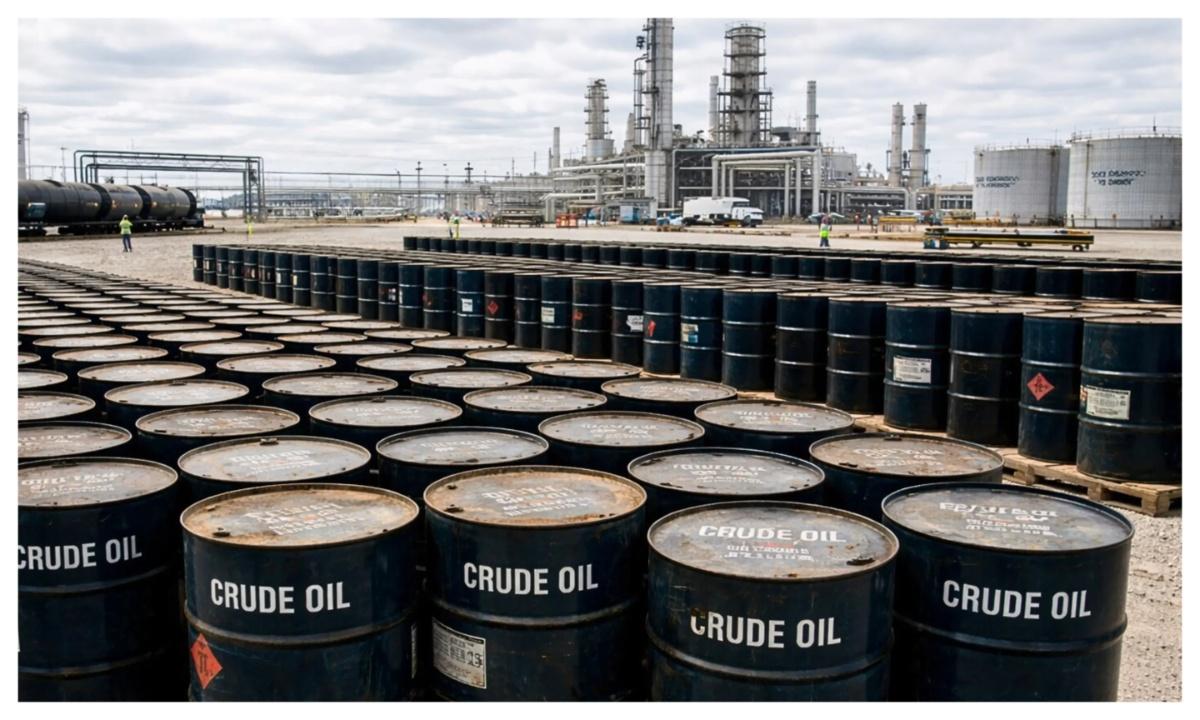
Iran War Oil Price Surge 2026: Why Nigeria is Losing Billions Despite High Crude Prices – Marketers Hiding Behind the War?
Kebbi, Nigeria – April 15, 2026: The numbers tell a story that hits every Nigerian pocketbook. In February 2026, before the full escalation of the US-Iran conflict, West Texas Intermediate (WTI) crude averaged around $64–$65 per barrel, with Brent hovering near $69–$70.
By early April, as the Strait of Hormuz effectively shut down, prices spiked dramatically—WTI and Brent both pushing above $100–$110 in volatile sessions, with some physical cargoes reportedly hitting records near $117–$141 amid shipping chaos. Even after fragile ceasefire talks and a temporary two-week pause in hostilities, benchmarks remain elevated: Brent recently settling around $97–$101 and WTI near $96–$99 as of mid-April. A 40–50% jump in weeks, not months.
Marketers and oil majors are quick to blame the “war.”
But many Nigerians, watching fuel queues lengthen and imported petrol prices climb despite our status as Africa’s largest oil producer, are asking the hard questions: Are they just hiding behind geopolitics? Oil is supposed to be a global commodity—why does a crisis halfway across the world expose us so brutally? Why does West Asia’s roughly 20% share of global oil transit dictate prices for the other 80%?
Why isn’t Europe ramping up its own North Sea production to cushion the blow? And with Jet A-1 fuel costs soaring, how long can airlines absorb the pain before everyday flyers—business travelers, families visiting relatives, even medical evacuations—pay the price?This isn’t abstract economics. For Nigeria, a nation that exports crude yet imports nearly all its refined petroleum products, the surge is a double-edged sword: higher benchmark prices on paper, but chronic underproduction, theft, and refining bottlenecks mean we capture little of the upside while suffering the full downstream pain. Let’s break it down, point by point, with the data and context that matter to every Nigerian household and policymaker.
The Global Commodity Reality: One Market, One Price
Oil isn’t like cassava or yam—local and regional. It’s a fungible international commodity priced on benchmarks (Brent for most of the world, WTI for the Americas) through futures markets in London and New York. Every barrel, regardless of origin, competes in a single global pool. When supply tightens anywhere, the marginal barrel—the last one needed to meet demand—sets the price for all.
That’s why even major producers feel the ripple. The US, now a net exporter thanks to shale, benefits handsomely: higher prices flow straight to producers and the economy.
Russia, largely insulated from Middle East shipping routes, pockets windfall revenues. But Gulf states? Many are net losers in volume. Saudi Arabia rerouted some exports via pipelines, yet overall shipments dropped sharply. Revenues for some OPEC members rose modestly on price alone, but production shut-ins of 7–10 million barrels per day (bpd) across the region erased much of the gain.Nigeria sits in a uniquely painful spot. We produce crude—light, sweet Bonny Light that refiners love—but our domestic refineries have historically operated at fractions of capacity. The landmark Dangote Refinery, now at or near full 650,000 bpd capacity, is a game-changer, even exporting fuels to Ghana, Tanzania, and Ivory Coast. Yet reports show it still imports crude cargoes to keep running at optimum. Why?
Because our upstream output consistently falls short. OPEC data confirms Nigeria produced just 1.38 million bpd in March 2026 (up slightly from 1.31 million in February), missing the 1.5 million bpd quota for the eighth straight month or more. Our 2026 budget assumed 1.84 million bpd including condensate.
The shortfall? Billions in lost revenue—estimates peg it at $3.4 billion already this year—precisely when global prices reward volume.
Oil theft, pipeline vandalism, and aging infrastructure aren’t new. They’ve plagued us for decades. But the current crisis amplifies the exposure: we sell what we can at elevated prices, yet import refined products at those same inflated global benchmarks. The naira weakens further under import pressure, feeding inflation that already bites hard on diesel generators, transport fares, and food (fertilizer and trucking costs). Marketers may indeed layer on margins, but the base price surge is no fiction—it tracks physical barrels lost.
Why the 20% (West Asia/Hormuz) Controls the Price for the 80%
Here’s the crux of the skepticism: West Asia doesn’t produce 80% of world oil. Global supply is diversified—US shale, Russia, Brazil, Guyana, Canada, Norway. Yet the Strait of Hormuz handles 20–21% of global petroleum liquids (about 21 million bpd pre-crisis) and a similar share of LNG. It’s the world’s premier chokepoint: a narrow 21-mile-wide waterway between Iran and Oman through which nearly all Gulf exports must pass.
When Iran retaliated to US-Israeli strikes (beginning February 28, 2026) by disrupting tanker traffic—attacks, blockades, skyrocketing insurance—the strait became a real barrier.
Not speculation. Not cartel games. Physical supply of 12–15 million bpd vanished. Tankers idled, Gulf producers shut in fields because they couldn’t load. OPEC+ offered minor quota hikes (symbolic, really), but rerouting via pipelines has limits. Saudi’s East-West line handles maybe 7 million bpd max; others have far less.
Economists call this “marginal pricing.”
The market doesn’t care that 80% of oil flows elsewhere. When the cheapest, highest-quality incremental barrels disappear, buyers bid up the next available ones—US shale, Brazilian pre-salt, even Nigerian exports. Risk premiums add volatility (fear of worse escalation), but the core move is supply physics.
Historical parallels abound: 1973 Arab oil embargo, 1990 Gulf War, even 2019 drone attacks on Saudi facilities—all proved chokepoints trump diversification in the short run.Alternative routes? Limited. Pipelines are full or politicized.
Strategic reserves (US, Europe, Asia) bought time but are finite. Non-OPEC producers ramped modestly, but shale and deepwater take months to years to scale meaningfully. Result: the 20% artery, once severed, dictated the global price surge. Nigeria’s exports (mostly to Europe and India) fetch higher benchmarks, but our chronic under-delivery means we miss the full windfall while paying premium for every imported litre of petrol, diesel, and jet fuel.
Europe and the North Sea: Why Not Drill More?
Europeans lecture the world on energy security, yet watch prices climb without a domestic surge. The North Sea—once a powerhouse—peaked in the late 1990s. Output has declined 75% since. It’s a mature, depleted basin: geology, not politics, is the primary constraint. New fields are smaller, costlier, and take 5–10 years from discovery to first oil. Even if the UK reversed its Labour government’s ban on new exploration licenses tomorrow, meaningful barrels wouldn’t flow until the crisis is history.
Recent analysis shows hundreds of licenses granted between 2010–2024 yielded just 36 days of gas equivalent. “Maxing out” the North Sea is political rhetoric, not engineering reality. Norway continues awarding licenses for managed decline and jobs, but the UK’s net-zero push, higher taxes (Energy Profits Levy), and investor caution limit appetite. Scotland’s First Minister has softened slightly, citing energy security amid the Iran war, yet experts insist new drilling changes little for bills or imports in the near term.
Europe imports LNG and pipeline gas aggressively, but oil remains global. Extra North Sea crude would sell at the world price anyway—no “cheap local pool.” Green energy investments (wind, solar) help long-term but offer zero short-term offset for liquid fuels. The result? European refiners and consumers feel the same pain as Nigerians, just with stronger currencies and subsidies to cushion it.
Aviation’s Jet A-1 Fuel Shock: Airlines Bearing Costs—for How Long?
Jet fuel (kerosene-based Jet A-1) is crude’s direct descendant—roughly 30–40% of a barrel refined into it. Prices have exploded. US Jet-A averaged $8.63 per gallon in April 2026, up nearly $2 from March and over $2 year-on-year. Globally, equivalent to $150–$200+ per barrel in spots during peaks. Airlines hedged some exposure, but the surge is biting.
For now, carriers are absorbing much of it—Delta alone warned of $2 billion extra Q2 costs; United flagged up to $11 billion annually if sustained. Responses include: baggage fee hikes ($10–$50 per bag on some routes), summer fare increases (10%+ domestically per analysts), schedule cuts (hundreds of flights trimmed), and profit warnings from Qantas, Air France-KLM, and others. Budget carriers feel it first; premium routes see surcharges.
Passengers haven’t seen the full hit yet—lag time of 2–3 months for fare adjustments. But it’s coming. International routes to Asia (Hong Kong, Delhi) already embed higher costs. Medical flights, cargo, and domestic Nigerian airlines (Arik, Air Peace) face the same math: higher ticket prices or reduced frequencies. For a flying population already stretched by naira devaluation, this means costlier business travel, family reunions, and remittances. No free lunch forever—airlines can’t subsidize indefinitely without bleeding cash or cutting capacity.Is It Pure Geopolitics or Market Manipulation?
The war is real. The blockade is real. Physical shut-ins dwarf past shocks. Yet skepticism persists: risk premiums, futures speculation, and opaque trading can amplify moves. OPEC+ coordination, major oil company earnings, and marketer margins deserve scrutiny. No credible evidence of outright “hiding,” but history shows crises create opportunities for windfalls. Nigeria’s regulators must audit local pricing—why does pump price lag or lead benchmarks unpredictably?
Broader lessons: diversification fails when arteries clog.
Climate policies accelerate decline in mature basins without backups. Developing producers like us pay twice—underproduce and overpay downstream.
The Way Forward for Nigeria
We cannot control Hormuz or North Sea policy. But we control our destiny. Full Dangote utilization, plus modular refineries, ends the import trap. Aggressive anti-theft (pipelines, surveillance, community deals) could add 200,000–400,000 bpd quickly. OPEC quota compliance isn’t optional for credibility. Long-term: gas commercialization, renewables for power, and sovereign wealth discipline turn volatility into stability.
The Iran war may ease with ceasefires, but chokepoints remain vulnerabilities.
Prices eased slightly on dialogue hopes, yet stay 30–40% above pre-conflict. Nigeria’s exposure is laid bare—not by war alone, but by self-inflicted gaps.
As Kebbi Daily News has chronicled, ordinary Nigerians bear the brunt: higher transport, food, and now air travel costs. Policymakers must act decisively. Marketers may cite geopolitics; we must demand accountability and self-reliance.
This crisis isn’t just about oil prices. It’s about sovereignty in a globalized energy market where 20% can still humble the 80%—and expose the unprepared.
Sources and data drawn from OPEC reports, EIA chokepoint analysis, airline earnings disclosures, and real-time market tracking as of April 15, 2026. Views expressed are analytical and do not represent official policy.
More iran-war-oil
See All →
NNPC-SNEPCo 2026 Postgraduate Scholarship: Fully Funded UK Master's Degree for Nigerians – Complete 2026 Guide, Eligibility, Courses, Deadline & Application Tips
The 2026 edition funds a rigorous one-year full-time MSc program commencing in September 2026. It is designed as a comprehensive package that removes financial barriers, allowing scholars to focus entirely on academic excellence and personal growth.
Also in iran-war-oil

Gwandu and Argungu Emirs Endorse President Tinubu and Governor Nasir Idris for 2027 Elections in Kebbi State
Royal Blessings for Continuity: Gwandu and Argungu Emirs Endorse President Tinubu
By Kebbi Daily News • 6d ago

Kebbi State Solidifies Support for Tinubu 2027: Governor Nasir Idris Praises APC Members After Landslide Presidential Primary Victory
The Kebbi APC Chairman, Alhaji Abubakar Kana-Zuru, declared the results a reflection of massive grassroots support.
By Kebbi Daily News • 6d ago