Ghana Jollof: The Real Issue Isn't the Rice
Beyond Ghana Jollof: The True Challenge Is a Young Population in Economic Crisis
Ghana Jollof: The Real Issue Isn't the Rice
Ghana is widely described as the gateway to Africa and has been tagged "Easy Africa" by tourists and business travelers alike. The government has opened its doors to every African, with visitors able to stay for 90 days without a visa. This visa-free policy for all African passport holders took effect in early 2025, reinforcing Ghana's reputation as the continent's most welcoming nation.
Biting inflation, a rebased currency, and IMF loans show that the Black Star country is battling serious economic challenges - yet its unyielding spirit remains intact. Inflation has fallen sharply, reaching 3.3% in February 2026, the lowest since the 2021 CPI rebasing and the 14th consecutive monthly decline. The leadership has one core function: to make the country great again.
Even in the face of adversity, Ghana has proven its resilience before. In the 1990s, when much of Africa was experiencing political instability and chaotic governance, Ghana defended its democracy and remained politically stable. The ECOWAS member state has since risen to become the backbone of West Africa, launching the landmark Year of Return in 2019 to reinforce that position on the global stage.
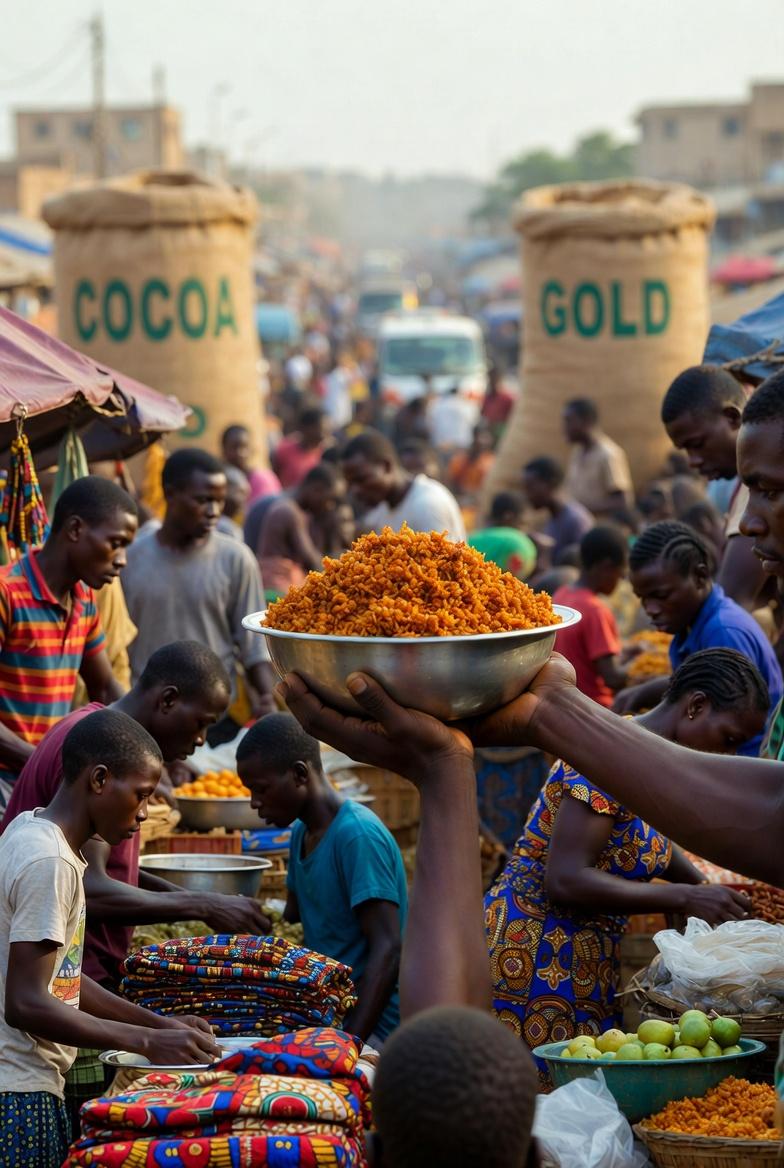
Ghana's exports - primarily cocoa, gold, and oil - have witnessed a sharp increase in recent years. Exports surged to a record approximately $31.1 billion in 2025, up from $19.1 billion in 2024, with a trade surplus of $13.66 billion. Gold earnings doubled to approximately $20 billion, cocoa rose to approximately $3.8 billion, and oil declined to approximately $2.62 billion.
Despite these gains, the country imports almost everything: rubber, steel, vegetables, and even electricity. How does a nation survive under such conditions? By borrowing from across the world. But the problem with borrowing is control. Ghana remains under the IMF Extended Credit Facility, with the fifth review completed in late 2025 and performance deemed satisfactory. The country is on track to exit the program by approximately April 2026 amid stabilization gains - a meaningful milestone worth watching.
One challenge that cannot be ignored is the decline in investor relations with the West. No African nation can survive on investment from Africa alone, and Ghana is no exception. The current administration has attempted to improve relations with the AES countries - Mali, Burkina Faso, and Niger - that broke away from ECOWAS. The Mahama administration has actively urged continued dialogue and bridge-building with these nations rather than isolation, calling for reconciliation and ongoing engagement. However, this effort has not yet yielded significant results.
At 69 years old, Ghana is still a young nation - but not too young to begin implementing the structural changes needed to stimulate economic growth and create employment opportunities for its rapidly growing youth population. The path forward lies in building industries that process Ghana's own raw materials: refining petroleum domestically, processing cocoa into finished chocolate and beverages, and encouraging mechanized farming at scale.
Reliance on foreign governments for growth is harming the next generation. Today, many Ghanaians speak about debt relief, while the youth look toward Europe, Ethiopia, and America for better opportunities. This brain drain is a quiet crisis that deserves the same urgency as inflation or currency depreciation.
Corruption must be addressed at every level, and the government must enforce accountability among all public officeholders. The John Mahama administration has taken some early steps in the right direction. Cutting costs - including canceling paid television subscriptions at Jubilee House - may seem symbolic, but it sends a powerful signal to a population that has called for fiscal discipline for decades.
Symbolic steps, however, are not sufficient on their own. Financial leakages must be closed. Fraud must be confronted from the lowest to the highest levels of government. Corporations must begin paying their fair share of taxes. These are not radical demands. They are the basic requirements of a functioning, self-reliant state.
The path to the future is clear. Ghana has the resources, the democratic tradition, the geographic advantage, and the human capital to become a true African powerhouse. The question is not whether Ghana can rise - the record exports, the falling inflation, and the IMF exit trajectory all suggest it already is rising. The question is whether its institutions will move fast enough to ensure that rise benefits everyone, not just those at the top.
It is morning already in Ghana. Waking up is not something to avoid.

Related
Power Set to Return to Kebbi by Weekend as KEDCO Confirms Progress on Damaged Transmission Line
More Ghanaat69th
See All →Kebbi Residents and Businesses Count Heavy Losses as Prolonged Blackout Enters Second Week
Residents and business owners across Birnin Kebbi and surrounding areas continue to suffer mounting losses as the power outage caused by the collapse of a major transmission tower on the Kainji to Birnin Kebbi line stretches into its second week with no firm restoration date yet confirmed.
Also in Ghanaat69th
Power Set to Return to Kebbi by Weekend as KEDCO Confirms Progress on Damaged Transmission Line
Residents of Kebbi State have received fresh assurance that full electricity supply will be restored by the weekend after weeks of disruption caused by the collapse of three major transmission towers on the Kainji to Birnin Kebbi line.
By Kebbi Daily News • 2d ago

Kebbi’s Unending Nightmare: When Will Banditry, Lakurawa Attacks and Kidnappings End?
From the killing of 10 police officers in a fierce Sakaba clash to the ransom release of a High Court judge and months-long school closures, Kebbi residents ask a painful question as insecurity refuses to relent.
By Kebbi Daily News • Sep 2