The Sokoto-Badagry Highway: same stories, different people
Kebbi sections show 4 kilometers of CRCP completed by December 2025, with 64 kilometers cleared
The Sokoto-Badagry Highway: same stories, different people
Today, we're zeroing in on the latest update: an inspection by a top presidential aide revealing active construction on the Katami-Kebbi border axis. We'll break it down, praise what's working, and call out the potential pitfalls, because that's what we do here – no sugarcoating.
The Long Road to Revival: A Historical Overview
To understand the significance of this update, we need to rewind the clock. The Sokoto-Badagry Highway isn't some fresh idea dreamed up in a Lagos boardroom; it's a vision that's been gathering dust for nearly half a century. Conceived during the administration of late President Shehu Shagari in the late 1970s, this 1,068-kilometer superhighway was intended to link Sokoto in the northwest to Badagry in the southwest, traversing eight states: Sokoto, Kebbi, Niger, Kwara, Oyo, Ogun, Ondo, and Lagos. It was billed as a spur to the Trans-African Highway network, facilitating trade, agriculture, and cross-border commerce with neighboring countries like Niger and Benin Republic.
But like so many grand plans in Nigeria's checkered infrastructure history, it languished. Successive governments – from military regimes to democratic ones – cited funding shortages, bureaucratic inertia, and shifting priorities as excuses. Critics, including opposition figures and civil society groups, have long pointed to corruption and poor planning as the real culprits. Billions were allegedly siphoned off in feasibility studies and contracts that went nowhere, leaving communities along the route mired in poverty and isolation. Fast-forward to 2024: President Bola Ahmed Tinubu's administration flagged off construction in October, framing it as a cornerstone of his "Renewed Hope Agenda." The project, divided into sections and phases, is being executed by Hitech Construction Nigeria Ltd., with a 36-month timeline and a focus on modern features like solar lighting, CCTV, and continuously reinforced concrete pavement (CRCP).
This revival isn't without controversy. Detractors argue it's a political ploy to woo northern voters, especially in Tinubu's southwest base and the northwest stronghold. And while the government touts it as a connector to the Lagos-Calabar Coastal Highway, skeptics question whether it's truly integrated or just another standalone promise. Drawing from reports on similar projects, such as those covered by regional outlets like Kebbi Daily News (which has historically spotlighted infrastructure gaps in the northwest), the highway's delay has exacerbated economic disparities. For instance, Kebbi Daily News articles from the past have critiqued federal neglect of northern roads, noting how poor connectivity hampers agricultural exports – a point that resonates here, as the Sokoto-Badagry route passes through fertile farmlands. Yet, with no recent Kebbi Daily News pieces specifically on this update, it raises questions about media coverage – is local journalism under-resourced, or is the project flying under the radar?
The Latest Inspection: Progress or Propaganda?
Now, to the heart of the matter: the recent inspection that sparked this buzz. On January 21, 2026, Hon. Abdullahi Tanko Yakasai, Senior Special Assistant to the President on Community Engagement (Northwest), represented the Minister of Works, Senator Dave Umahi, during a site visit to the Sokoto-Badagry Road. Focusing on the Katami-Kebbi border axis in Sokoto State's Silame Local Government Area, Yakasai reported "active construction ongoing" with CRCP casting underway. This marks a shift from preparatory earthworks to permanent pavement installation, a critical milestone.
From X posts and official statements, the visit highlighted tangible advancements: reinforcement rods installed, solar streetlights partially erected, and nearly 10 kilometers of CRCP laid toward the Kebbi border. Yakasai praised President Tinubu for resurrecting a project neglected for over 40 years, emphasizing job creation, security enhancements, and agricultural boosts. He also commended Minister Umahi and Minister of State Bello Goronyo for oversight, and local controller Engr. Kasim Maigwandu for diligence.
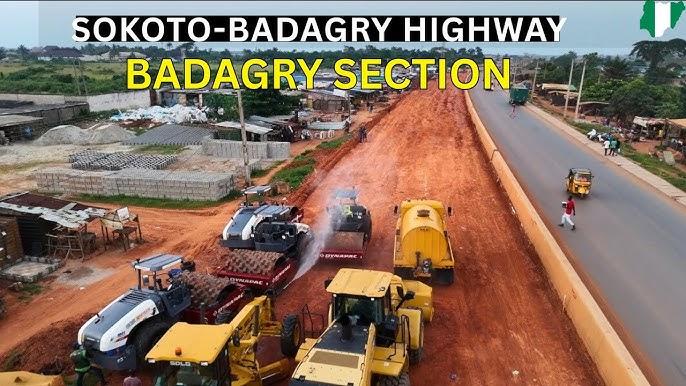
Is this progress as impressive as it sounds? Construction began in November 2025, so in just two months, reports claim 18 kilometers of earthworks, 47 kilometers of site clearance, and CRCP on select stretches. That's commendable, but for a 1,068km behemoth, it's a drop in the ocean. Similar updates from Kebbi sections show 4 kilometers of CRCP completed by December 2025, with 64 kilometers cleared. Visuals from the site depict bustling activity – excavators, concrete mixers, and workers – but also reveal the scale of the challenge: vast bush-clearing in remote areas.
Critics might argue this is more photo-op than substance. Yakasai's visit, documented heavily on X by pro-government accounts, feels like a PR blitz. And while the government stresses "value for money," the lack of transparent cost breakdowns invites scrutiny. How much has been spent so far? Are local communities truly benefiting, or are contracts favoring big firms like Hitech?
Technical Breakdown: Innovation Meets Reality
Diving deeper into the nuts and bolts, the Sokoto-Badagry Highway stands out for its use of CRCP – a rigid, durable pavement designed for heavy traffic and longevity. Unlike flexible asphalt, CRCP minimizes cracking and maintenance needs, ideal for a route expected to handle trucks laden with agricultural produce from the north to southern ports. The project spans 1,068km, with Section 1 in Sokoto (starting at Illela), Section 2 in Kebbi (258km dual carriageway), and onward through other states.
Recent X threads detail milestones: In Sokoto's Gande Village, excavation and stone-laying cover 81-85km; in Gidan Madi, stabilization links to Illela over 40-50km. Kebbi reports 63km cleared, 25km earthworks, and 7km CRCP done, plus a new quarry at Yauri. Modern touches like solar lights and CCTV promise safety in insecurity-prone areas.
Yet, technically, challenges abound. CRCP is expensive and time-intensive; weather in the northwest (dusty harmattan, rainy seasons) could delay pours. Environmentalists criticize the lack of detailed impact assessments – deforestation for clearance might exacerbate desertification in Sokoto and Kebbi. Referencing broader infrastructure critiques in outlets like Punch Newspapers, similar projects have overrun budgets by 20-50% due to inflation and forex issues. And with Nigeria's debt burden, is borrowing for this wise when basic roads in urban centers crumble?
Economic Promises and Potential Pitfalls
Proponents hail the highway as an economic lifeline. Minister Goronyo estimates thousands of jobs, unlocked trade, and national integration. Connecting Sokoto's onion farms to Lagos ports could slash transport costs by 30%, per government projections. It aligns with the African Continental Free Trade Area, boosting exports to West Africa. Local communities in Silame and Binji already report employment spikes during construction.
But critically, is this trickle-down economics at work? Past projects like the Abuja-Kaduna-Kano road have seen delays and cost escalations, benefiting elites more than locals. Displacement risks loom – farmers along the route may lose land without fair compensation. And with fuel subsidy removal inflating costs, will the highway's benefits offset rising tolls? Kebbi Daily News has previously highlighted how poor roads stifle Kebbi's rice economy; this project could help, but only if completed on time. Skeptics point to uneven development: Why prioritize this over fixing existing northern roads ravaged by bandits?
Moreover, in a nation where 40% live in poverty, the opportunity cost is huge. Funds for this could address healthcare or education. And transparency? The absence of updated audits fuels corruption fears – a staple in Nigerian infrastructure sagas.
Broader Criticisms: Politics, Environment, and Sustainability
Politically, the project is a win for Tinubu, rallying northwest support amid 2027 election whispers. But critics like Atiku Abubakar's camp might see it as favoritism. Environmentally, the highway's path through ecologically sensitive zones raises alarms – no comprehensive EIA reports are public. Socially, while it promises security via better policing, construction could disrupt livelihoods.
Referencing Voice of Nigeria reports, the government vows timely completion by 2027, but history suggests otherwise. And with global inflation, costs could balloon from the initial estimates (undisclosed but rumored in billions of naira).
Conclusion: Hope Renewed, But Vigilance Required
In sum, the Sokoto-Badagry update is a positive step – construction is humming, and the vision is bold. But for it to truly deliver, the government must address criticisms head-on: transparency, environmental safeguards, and equitable benefits. Folks, this could be Nigeria's infrastructure renaissance, but only if we hold leaders accountable. Stay tuned; we'll keep watching.
(Word count: 2,012)

Related
Power Set to Return to Kebbi by Weekend as KEDCO Confirms Progress on Damaged Transmission Line
More Kebbi sections
See All →Kebbi Residents and Businesses Count Heavy Losses as Prolonged Blackout Enters Second Week
Residents and business owners across Birnin Kebbi and surrounding areas continue to suffer mounting losses as the power outage caused by the collapse of a major transmission tower on the Kainji to Birnin Kebbi line stretches into its second week with no firm restoration date yet confirmed.
Also in Kebbi sections
Power Set to Return to Kebbi by Weekend as KEDCO Confirms Progress on Damaged Transmission Line
Residents of Kebbi State have received fresh assurance that full electricity supply will be restored by the weekend after weeks of disruption caused by the collapse of three major transmission towers on the Kainji to Birnin Kebbi line.
By Kebbi Daily News • 2d ago

Kebbi’s Unending Nightmare: When Will Banditry, Lakurawa Attacks and Kidnappings End?
From the killing of 10 police officers in a fierce Sakaba clash to the ransom release of a High Court judge and months-long school closures, Kebbi residents ask a painful question as insecurity refuses to relent.
By Kebbi Daily News • Sep 2